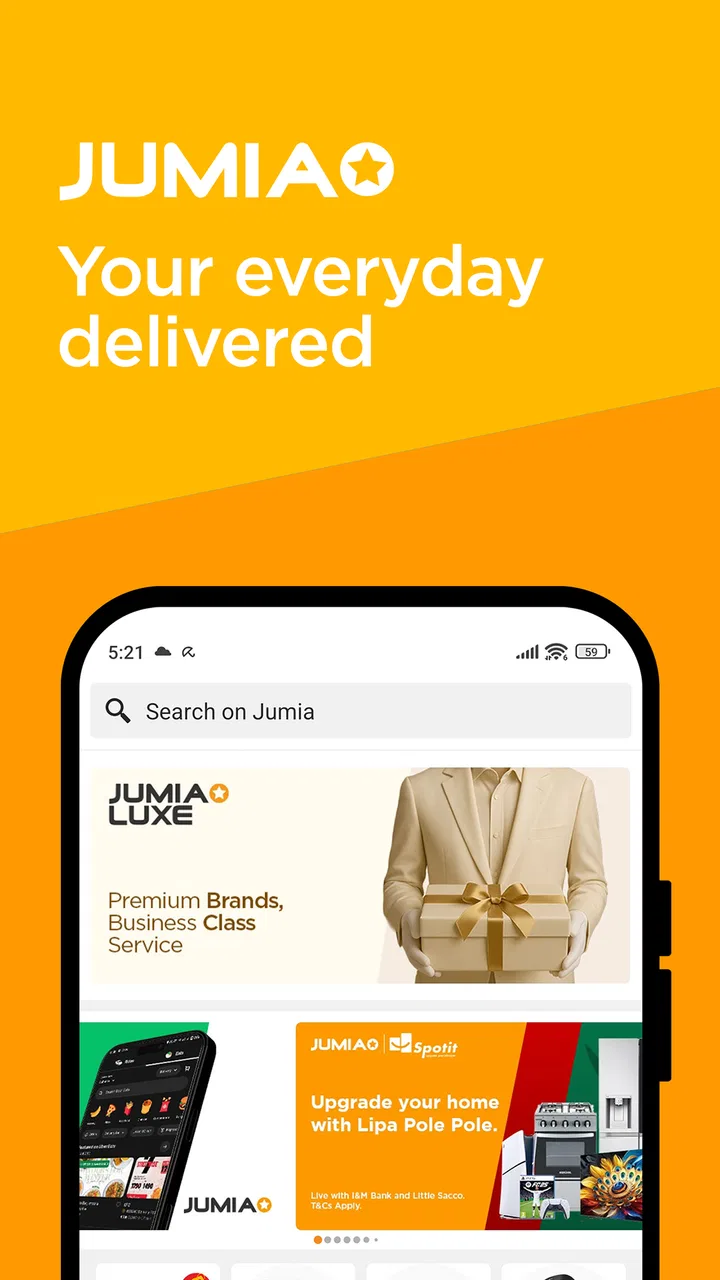
JUMIA Online Shopping
- 4.5
- Rating
- 100.00M
- Installs
- Free
- Price

 Analysis by App-foxy
I found JUMIA Online Shopping most useful when I treated it as a practical marketplace rather than a place to browse endlessly. It brings a wide range of shopping categories into one mobile app, and its strongest appeal is convenience: I can search, compare, save items for later, and manage an order without moving between several retailer apps. The experience is not perfect, but it is substantial enough to make sense for regular online shoppers who value choice and deal hunting.
JUMIA is a free shopping app developed by JUMIA, with a Teen content rating and support for Android devices running version 7.0 or later. It has been available since August 27, 2013, and the current version is 18.8.0. Its scale is easy to understand from its reach: the app has passed 100 million installs and holds a 4.5 average from around 2.6 million ratings. Those figures do not guarantee that every purchase will be smooth, but they do show that this is an established shopping platform rather than a small experimental storefront.
How JUMIA works in everyday shopping
I find the everyday value of JUMIA comes from having a clear plan before I start browsing: I can use a broad search to discover options, then narrow my choice by checking the details that matter to me. That approach helps keep a deal-led marketplace from turning a quick errand into an impulse purchase. It also sets up the next section’s closer look at how careful comparison makes the app work best.
In-Depth Coverage of JUMIA Online Shopping
A broad marketplace that rewards careful searching
The first thing I noticed is that JUMIA feels designed for shoppers who want options. Instead of opening a specialist app for electronics, another for household products, and another for fashion, I can begin with a general search and narrow the results from there. That is helpful when I know the type of product I need but have not decided on a particular brand or seller.
The trade-off is that a broad catalog requires more judgment from me. Similar products can appear with different descriptions, images, seller information, delivery conditions, or levels of detail. I found that the quickest way to avoid a disappointing choice was not to select the first attractive listing. I would compare several results, read the full description, inspect the available variations, and check the seller and delivery information before adding anything to the cart.
This is where the app is more useful than a simple product catalog. It gives me a place to compare alternatives in one session, but it expects me to act like a careful buyer. The real strength is not automatic decision-making; it is putting enough choices together for a sensible comparison.
Why the deal-focused approach can be useful
JUMIA’s shopping experience is clearly built around finding attractive offers. That makes it a good companion when I am flexible about the exact model, color, or brand I buy. For example, if I need a basic household item rather than a very specific product, I can use the search results to identify several acceptable options and then weigh the total value instead of focusing only on the headline price.
I would be more cautious when the purchase is urgent or highly specialized. A low listed price is not enough on its own. I also consider delivery expectations, seller information, product specifications, and the possibility that two similar-looking listings may not include the same accessories or configuration. This extra checking takes a little time, but it is the difference between using the marketplace intelligently and treating every deal badge as a recommendation.
A useful habit is to search with both a general term and a specific term. A broad search can reveal the range of products and current alternatives, while a more precise search helps reduce noise when I already know the model or size I want. I also avoid building a cart around an item before confirming its exact variant. On marketplaces, selecting the wrong color, capacity, or bundle can be an easy mistake if I move too quickly.
A realistic shopping scenario
Imagine that I need a replacement kitchen appliance before the weekend. I could open JUMIA, search for the appliance category, and compare several listings rather than committing to the first result. I would first decide which specifications actually matter, such as capacity, power, included attachments, or dimensions. Then I would remove listings that do not explain those details clearly.
After that, I would compare the remaining products by total value. One option might be cheaper but have a less convenient delivery expectation; another could cost more while offering a specification that matters to me. I would also read customer feedback with a specific question in mind: does the product match its description in real use? That approach makes the app useful even when I do not purchase immediately, because the browsing session helps me understand the market.
For a routine purchase, this workflow is fairly comfortable. For a gift, I would spend more time checking delivery timing and presentation details before ordering. For a high-cost item, I would also compare the final offer with a trusted specialist retailer. JUMIA can be the best option, but the app is most valuable when it is part of a comparison process rather than the only source I consult.
What the large user base tells me—and what it does not
The app’s reach and high average rating make it easier for me to take JUMIA seriously. Around 2.6 million ratings and more than 100 million installs suggest that many people have found enough value to keep using it or recommend it through the store system. Still, a large marketplace serves different regions, product types, and expectations, so I do not treat the overall rating as a guarantee for a particular listing.
My confidence comes more from the way I evaluate each purchase. A strong overall reputation is reassuring at the platform level, but the individual product page still matters. I look for a clear description, relevant images, useful customer feedback, and delivery information that matches my needs. The app can make that research easier, but it cannot replace it.
Small habits that make the app easier to use
I recommend deciding on a budget and a short list of must-have specifications before opening the app. Without that preparation, the number of deals and alternatives can pull me toward products I did not originally need. A written limit also makes it easier to distinguish a genuine upgrade from an impulse purchase.
You May Also Like

 Lords Mobile: Kingdom Wars
Lords Mobile Is a Kingdom-Building Routine, Not a Quick Match
A case-by-case verdict on the building, battles, device demands, and social commitments that make Lords Mobile rewarding for some players and exhausting for others.

 PDF Scanner app - TapScanner
TapScanner Makes Paperwork Easier to Capture, Check, and Share
TapScanner makes scanning with a phone feel less like a rescue operation and more like a dependable step in getting work done. Its capture tools are useful, though not flawless.

 Block Blast!
 Shows How Much a Puzzle Game Can Leave Out
A quiet grid game shows why puzzle players increasingly value instant clarity, repeatable skill and low-pressure play—and where the genre still needs to catch up.

 Family Space
 Review: A Shared Routine That Makes Family Life Easier
A parenting app earns its place not by adding more noise, but by making everyday coordination easier. Family Space gets that balance mostly right.

 1Weather Forecasts & Radar
 Makes the Daily Check Worthwhile
A good forecast does more than predict rain. This week's pick turns changing conditions into a clear, practical reason to check before you step outside.

 Clash of Clans
 Makes Patience Part of the Strategy
A village builder with a sharp tactical core, Clash of Clans turns patience into momentum and each raid into a small, satisfying act of judgment.
More From Our News Desk
View All News


I also separate browsing from buying. When I am only researching, I compare listings and note the product details without rushing to checkout. When I am ready to order, I review the selected variant and the order summary again. This two-stage approach is especially helpful for clothing, electronics, and bundled products, where a small selection change can alter what arrives.
Another practical tip is to use customer reviews as evidence about specific concerns rather than as a simple score. I look for comments about fit, build quality, packaging, or whether the item matched the photographs. A short review that answers my particular concern is often more useful than a general compliment. That is a more reliable way to use the app’s social information.
The meaningful weakness: marketplace friction
My main criticism is that the convenience of a large marketplace comes with uncertainty and extra checking. Results may look similar while differing in important details, and a polished product image can make it tempting to overlook incomplete specifications. The app helps me find products, but I still have to do the work of deciding whether a listing is genuinely suitable.
This matters most for shoppers who expect a tightly controlled retail experience. A specialist store usually has a narrower catalog, clearer product consistency, and a more focused buying journey. JUMIA offers more variety, but variety can also create decision fatigue. If I already know the exact item I want and a trusted specialist sells it directly, that alternative may feel faster and more predictable.
Deal-oriented browsing can create another kind of friction. Promotions and changing offers encourage me to revisit products, compare options, and watch the final order details. That is useful for flexible purchases, but it is less appealing when I want one straightforward transaction with minimal research. In my experience, the app rewards patience more than speed.
I would also avoid assuming that the cheapest result is the best result. The final decision should include the item’s specifications, seller information, delivery expectations, and the quality of the available feedback. This is not a flaw unique to JUMIA, but it is particularly important here because the marketplace format puts many alternatives next to one another.
Who should use JUMIA?
I think JUMIA is a strong fit for people who enjoy comparing products and who want one app for varied shopping needs. It works well for households that regularly buy everyday items, for shoppers who are open to several brands, and for anyone willing to spend a few minutes checking the details behind an appealing offer.
It is also useful for people who prefer researching on a phone. I can browse during a commute, save a possible purchase for later, and return when I have made up my mind. That flexibility is more valuable than it sounds, because it reduces the pressure to purchase during the first browsing session.
New online shoppers can use it successfully, but I would advise them to start with a low-risk purchase and learn the marketplace workflow before ordering something expensive. They should confirm the product variant, review the order summary, and read feedback that addresses their main concern. This is a better introduction than beginning with a high-value item where a mistake would be costly.
Who may be better served elsewhere?
I would not make JUMIA my first recommendation for someone who wants a narrow, specialist catalog and highly standardized product pages. If I need professional equipment, a precise replacement part, or an item where technical compatibility is critical, a dedicated retailer may provide clearer expertise and fewer distractions.
It may also be the wrong choice for shoppers who dislike comparing sellers or reading product details. The app can save time when I use it deliberately, but it can consume time when I browse without a plan. Someone who wants to select one familiar product from one established retailer may prefer a simpler direct-shopping experience.
People with very strict delivery requirements should also compare alternatives before ordering. JUMIA is attractive for choice and deals, but urgency changes the decision. When the exact arrival window matters more than price or selection, I would prioritize the retailer that gives me the clearest confidence for that specific purchase.
How it compares with ordinary shopping alternatives
Compared with visiting physical stores, JUMIA gives me a faster way to scan a wider range of products without traveling between locations. It is especially convenient for routine goods and for early research. The disadvantage is that I cannot inspect the item in person before buying, so descriptions and customer feedback become more important.
Compared with a single-brand or specialist shopping app, JUMIA usually offers broader discovery. I can find alternatives that I might never encounter in a narrowly focused store. The specialist app may still win when I need expert product guidance, a carefully curated range, or a very predictable checkout path.
Compared with general web searching, the dedicated app gives me a more focused shopping environment. I can keep product discovery and purchase management together instead of jumping between search results and separate retailer pages. However, I still think external comparison is sensible for expensive purchases, because the most convenient marketplace is not automatically the best place for every item.
Installation, cost, and practical expectations
There is no purchase price for installing JUMIA, which makes it easy to try without committing money upfront. The app belongs in the shopping category, and its Teen rating is worth noting for families deciding which marketplace apps younger users may access. Installation support begins with Android 7.0, so users on older devices should check compatibility before planning around it.
The free entry point is useful, but the cost of using a shopping app is not limited to installation. I still consider the item total, delivery conditions, and the time required to compare listings. A free app can be convenient while a poor purchase remains expensive, so I keep the distinction clear: the app costs nothing to download, but careful ordering still requires attention.
The current version, 18.8.0, indicates that the app is actively maintained as part of a long-running service. I would still keep the application updated through the normal device process, particularly if I rely on it for order management. That is less about expecting a specific improvement and more about avoiding unnecessary problems caused by using an outdated build.
My final judgment
JUMIA succeeds because it combines broad product discovery with a deal-focused shopping experience that is easy to access from a phone. I like it most when I have a clear need, some flexibility, and enough time to compare listings carefully. The app can help me find a sensible option without visiting multiple stores, and its large user base gives the platform a reassuring level of familiarity.
Its limitation is equally clear: it does not remove the responsibility of being a careful shopper. The marketplace format means I need to inspect details, compare alternatives, and resist buying purely because an offer looks attractive. For highly specialized purchases, urgent orders, or shoppers who want a tightly curated retailer, another option may be better.
My recommendation is therefore specific rather than universal. JUMIA is worth trying if your priority is variety, mobile convenience, and the chance to compare deals in one place. I would use it for everyday shopping and flexible purchases, while checking specialist retailers when precision, speed, or expert guidance matters more than selection. Used with that judgment, it is a capable shopping companion rather than just another app filled with tempting listings.
FAQs for JUMIA Online Shopping
01What is JUMIA Online Shopping?
JUMIA Online Shopping is a leading e-commerce platform available for Android and iOS devices, offering a wide variety of products, including electronics, fashion, home appliances, and more. Users can browse thousands of items, access daily deals, and enjoy convenient home delivery services.
02Is JUMIA Online Shopping safe to use?
Yes, JUMIA Online Shopping is safe and secure. The app uses encryption to protect your data and offers secure payment options. Moreover, it has a robust customer service team ready to assist with any issues or inquiries, ensuring a reliable shopping experience.
03What features does JUMIA Online Shopping offer?
JUMIA offers features like easy navigation, personalized recommendations, and daily flash sales. Users can track their orders in real-time, save favorite items to wishlists, and enjoy multiple payment options, including cash on delivery. The app also provides customer reviews to help make informed purchasing decisions.
04Are there any special promotions or discounts available on JUMIA?
Yes, JUMIA frequently offers special promotions, discounts, and flash sales. Users can find daily discounts on various categories and take advantage of exclusive app-only deals. Signing up for the newsletter or enabling notifications can help you stay updated on the latest offers.
05How does JUMIA handle returns and refunds?
JUMIA has a user-friendly return policy, allowing customers to return items within a specified period if they are unsatisfied. The app provides a step-by-step guide on initiating returns, and refunds are processed promptly once the return is approved. Customer support is available to assist with any return-related queries.
Pros
- Wide variety of products available.
- User-friendly and intuitive interface.
- Secure payment options provided.
- Regular discounts and promotions.
- Fast and efficient delivery service.
Cons
- Occasional app crashes reported.
- Customer service response can be slow.
- Some items may have limited stock.
- Navigation can be cluttered at times.
- Higher shipping fees for certain regions.

JUMIA Online Shopping
Gallery